
If a company’s short-term assets are not enough to cover its short-term liabilities, then the company may be forced to sell a long-term asset in order to cover those liabilities. Interest-bearing debt which includes all long-term debt that the company has issued, including bonds, loans, and other borrowings. As explained by Investopedia, capital employed is a term that s used commonly, but is a little difficult to be defined for it is used in different contexts. However, all the definitions usually refer to the investment required for the functioning of a business. Cost of capital is the rate of return a firm must earn on its investments to maintain its market value and attract funds. It serves as the discount rate for evaluating projects using cash flow techniques.
What is the Working Capital Formula?
- Your business can draw on the line for capital whenever it’s needed and pay down the outstanding balance when business cash flow improves.
- Running a business demands constant investment—whether it’s for growth, purchasing machinery,…
- It can signal that a company is not effectively utilizing its assets to generate maximum revenue.
- It means that the business has the ability to repay more than the total value of its current liabilities.
- Drawbacks include higher interest rates, higher fees for cash advances and the ease of running up excessive debt.
- Their business model, therefore, requires them to have higher working capital in the form of inventory.
Companies with significant working capital considerations must carefully and actively manage working capital to avoid inefficiencies and possible liquidity problems. On the subject of modeling working capital in a financial model, the primary challenge is determining the operating drivers that must be attached to each working capital line item. Each $1 invested in working capital is retained earnings expected to generate $6.30 of revenue. Although this may not appear to be a particularly efficient use of resources, the first year’s trading may not be representative.
- This can enhance liquidity, strengthen financial health and increase return on assets for long-term success.
- I’m glad you’ve found your way here; we help businesses get the funding they need without the fuss.
- Net working capital tells you how much money you have readily available to meet current expenses/obligations.
- Many large companies often report negative working capital and are doing fine, like Wal-Mart.
- Positive NWC enables smoother operations and room for growth, while negative NWC can lead to cash flow struggles.
working capital ratios
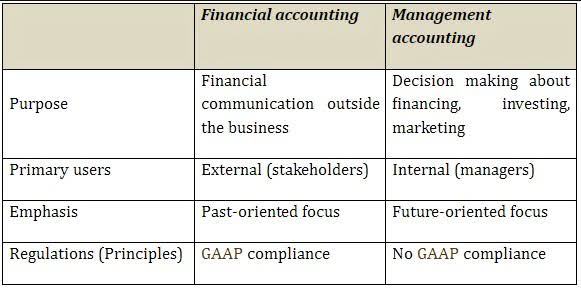
The ratio is the relative proportion of an entity’s current assets to its current liabilities, and shows the ability of a business to pay for its current liabilities with its current assets. A working capital ratio of less than 1.0 is a strong indicator that there will be liquidity problems in the future, while a ratio in the vicinity https://www.revistalate.es/2025/04/25/new-york-tax-tables-2025-state-income-tax-brackets/ of 2.0 is considered to represent good short-term liquidity. The ratio is used by lenders and creditors when deciding whether to extend credit to a borrower.
- This ratio helps estimate a business’s current assets as a proportion of its current liabilities and assess its operational efficiency and financial health.
- This may lead to more borrowing, late payments to creditors and suppliers, and, as a result, a lower corporate credit rating for the company.
- A low ratio may be acceptable if a business has a large unused line of credit.
- However, the company’s cash position will fall due to the longer wait for customers to pay, potentially leading to the need for a bank overdraft.
The Most Popular Accounting & Finance Topics:

After all, juggling inventory, paying employees, and plotting your next marketing move isn’t child’s play. It’s not your only measure of success, but it’s one that helps you stay grounded in the reality of your immediate financial obligations. You could be losing significant sums each quarter yet still have a respectable working capital ratio ratio – maybe because you just sold a big chunk of inventory. So while this metric is helpful for short-term liquidity, don’t let it fool you into thinking your business is profitable if you’re seeing red on your income statement.
Below is a short video explaining how the operating activities of a business impact the working capital accounts, which are then used to determine a company’s NWC. The working capital formula subtracts what a business owes from what it has to measure available funds for operations and growth. To predict how these optimizations will impact your working capital, you can again look to the calculator. You may, for example, want to check what effect shortening collection times will have on your accounts receivable or what an increase will do to your inventory turnover rate.